Why Boat Steering Gets Stiff in the First Place
Boat steering has gotten complicated with all the conflicting advice flying around — YouTube says grease everything, forums say replace everything, and meanwhile you’re standing at the helm wondering why turning feels like arm-wrestling a fire hydrant. As someone who has limped a 22-foot center console into a crowded marina with both hands shaking, I learned everything there is to know about steering stiffness. Today, I will share it all with you.
So what causes stiff boat steering? In essence, it’s friction or pressure failure somewhere between your hands and the engine. But it’s much more than that. The problem almost always lives in one of three systems: rotary cable, rack and pinion, or hydraulic. Each one quits on you differently. Cables corrode and bind from salt spray. Rack and pinion setups get gummed up as gears wear or collect debris. Hydraulic lines trap air bubbles or slowly lose pressure. That’s what makes pinpointing the system so valuable to us boaters — fix the right thing once instead of everything twice.
Here’s your first diagnostic question. Is the steering stiff at the helm only, or stiff everywhere including the engine bracket? Stiff at the wheel but smooth when you manually push the outboard — that points to the cable or hydraulic lines. Stiff at both ends? The tilt tube or steering arm is the real problem. This one distinction alone saves hours of pointless troubleshooting. So, without further ado, let’s dive in.
Check the Steering Cable First
Most smaller boats — anything under 24 feet, really — run cable steering. Simple system. Vulnerable system. Essentially braided steel rope inside a plastic-coated tube, and saltwater is its worst enemy.
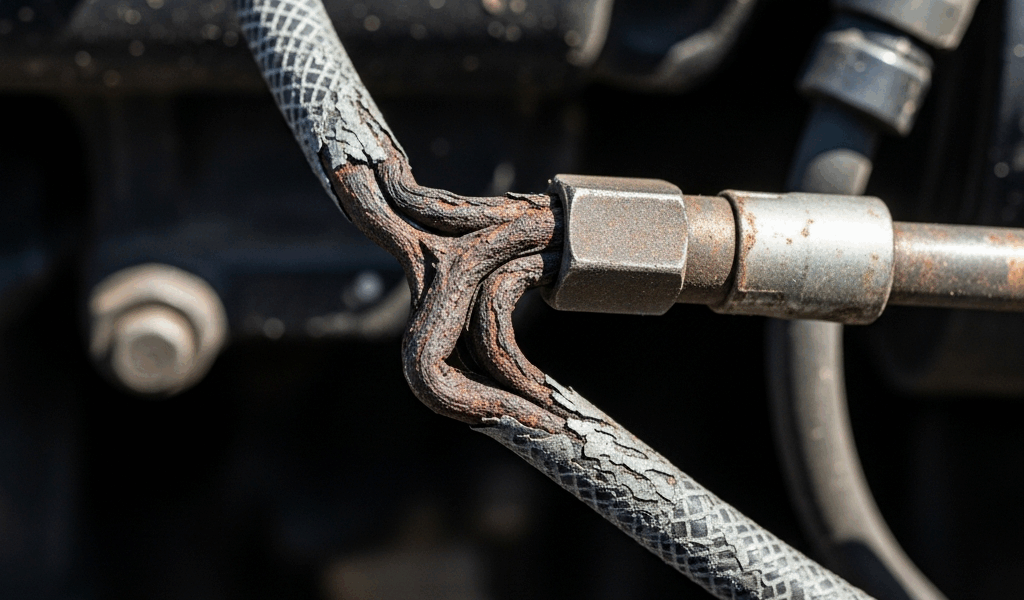
Start with a visual inspection of the full cable run from the helm unit back to the outboard bracket. Orange or white crusty buildup means saltwater got inside. Kinks, sharp bends, spots where the cable rubs the hull — those are friction points that fight you every single turn. I found a 90-degree kink behind a bulkhead on my old Mako 171 that had been there for who knows how long. That was 2019. Took me 45 minutes to find it and about 8 seconds to feel stupid about it.
Probably should have opened with this section, honestly — disconnecting the cable before you spend an hour cranking the wheel makes everything easier. Pop the cable at both ends if you’re comfortable doing so, then manually slide the inner cable in and out a few inches. Smooth with light resistance means healthy cable. Jerky or sticky movement means internal corrosion or fraying. Uniform stiffness that loosens up after several strokes usually just means the cable needs lubrication.
For lube, marine-specific cable lubricant is the only way to go — at least if you want it to last more than one season. I’m apparently particular about this stuff and Yamaha Synthetic Cable Lube works for me while generic WD-40 never actually holds up past a few weeks. Teleflex Marine Grease and Sea Foam both work too. Apply it at the helm grommet, then turn the wheel back and forth about 20 times to work it down the full run. You should feel loosening within the first few turns. If nothing improves after five minutes of this, the cable is corroded past saving. Don’t make my mistake of re-lubricating a dead cable three times before finally replacing it.
Cable replacement runs roughly $150 to $400 depending on boat length. Figure 90 minutes of work on a 20-footer if you’re doing it yourself.
Inspect the Helm and Connections
The helm — the actual wheel mechanism mounted at the cockpit — wears down gradually. Slowly enough that most people don’t notice until it becomes a real problem. Loosen the wheel nut and spin the wheel freely with zero cable attached. Spins like a top? Problem is downstream. Still stiff? The helm itself is telling you something.
Common helm problems include:
- Loose fasteners where the helm bolts to the pedestal. Start with the base bolts and work outward with a basic wrench set.
- Corroded or worn rotary gears inside the mechanism — look for small metallic teeth visible through the wheel base opening.
- Salt and dirt buildup inside the gear housing. Spray white vinegar directly inside to break down corrosion, then flush thoroughly with fresh water.
- A cracked housing. That one is a pro job — full stop, do not attempt a patch repair.
The cable-to-helm connection is sneaky too. Check where the cable ferrule meets the wheel attachment point. Loose or corroded there and the cable won’t pull straight — you get uneven, grinding resistance instead of smooth turns. Tighten the ferrule nut until it will not spin by hand. That’s your target.
Hydraulic Steering Problems That Cause Stiffness
Larger boats — 24 feet and up, mostly — run hydraulic steering. Feels smoother under load, requires less effort at the wheel. But hydraulic systems fail in specific ways, and stiffness is one of the loudest warning signs they give you before something worse happens.
First, check the hydraulic fluid level. Most systems run Teleflex Hydraulic Fluid or SeaStar Solutions fluid — check your owner’s manual for the exact specification before you pour anything in. The reservoir is usually mounted near the helm housing or on the engine bracket itself. Fluid should sit between the min and max marks on the sight glass. Low fluid is the single most common cause of hydraulic stiffness, and fixing it takes about five minutes. That’s it.
If the level looks right, air in the lines is your next suspect. Air compresses under pressure — fluid doesn’t — so trapped bubbles create resistance that makes the pump feel like it’s struggling against itself. To bleed the system, start the engine and turn the wheel fully port, then fully starboard, 15 times at idle. Go slowly. Air migrates back toward the reservoir and escapes over several cycles. You should feel the steering ease noticeably within the first few passes. If nothing improves, the air pocket is trapped deep in the system and you’ll need a mechanic with a proper pressure bleeder — the $12 hand pump from the auto parts store won’t cut it here.
A failing hydraulic pump shows up differently. Gradual stiffness that gets worse over weeks, not days. The pump runs but loses pressure as the internal seals wear down. Not a DIY repair. Replacement installed runs $800 to $1,500 depending on the system.
One-direction stiffness — hard to turn to starboard, easy to port, for example — points to a failing ram cylinder. Worn seal lets fluid bypass internally instead of actually moving the steering arm. Also a mechanic’s job. That’s what makes hydraulic diagnosis endearing to us boaters who prefer simple answers — the failure mode usually tells you exactly which component quit.
When to Fix It Yourself and When to Call a Pro
Cable lubrication? Do it yourself. Twenty minutes, costs under $15, requires nothing fancier than the lube itself. Tightening helm bolts and checking connections? Also DIY. Standard wrench set, nothing exotic.
Cable replacement is borderline. While you won’t need a full marine shop setup, you will need a handful of hours, a decent cable routing diagram for your hull, and patience. If you’re comfortable tracing the old cable path and duplicating it exactly, go for it. If you’re unsure where the cable runs through the hull — call someone. Misrouted cable creates worse stiffness than what you started with, plus chafe points that fail faster.
Hydraulic fluid changes and bleeding are doable on a first attempt — at least if you follow the manufacturer’s bleed procedure step by step and don’t rush the process. I’d still lean toward a pro for your first hydraulic system. One wrong step introduces air or contamination and you’re back to square one.
Call a mechanic immediately if you find a cracked helm housing, a cable that won’t move even after proper lubrication, or a hydraulic pump losing pressure under load. These aren’t weekend warrior fixes.
Last thing — and this matters more than people admit. Stiff steering isn’t just annoying. It’s a genuine safety problem. A boat that fights you at the wheel is hard to control in an emergency, exhausting to dock in crosswinds, and flat-out dangerous in tight quarters. Spend an hour on this before the season starts. Smooth, responsive steering is one of those things you don’t appreciate until it’s gone — and really don’t appreciate when it goes wrong a half-mile offshore.



Stay in the loop
Get the latest nautical soundings updates delivered to your inbox.