Safety Equipment: The Gear That Saves Lives
Boat safety equipment has gotten complicated with all the different regulations, rating systems, and product options flying around. As someone who’s been through Coast Guard inspections and genuinely scary situations where this gear mattered, I learned everything there is to know about what you actually need aboard. Today, I will share it all with you.
When things go wrong on the water, proper safety equipment is the difference between a close call and a tragedy. The U.S. Coast Guard mandates minimum equipment, but smart boaters exceed requirements because regulations define bare minimums—not best practices.
Safety gear falls into two categories: equipment that prevents emergencies and equipment that helps you survive when prevention fails. You need both.
Personal Flotation Devices (PFDs)
Probably should have led with this section, honestly. The most critical safety item on your boat. Federal law requires one wearable PFD per person plus one throwable device on boats 16 feet and longer. But here’s the truth: PFDs only work if you’re wearing them when you go overboard.
Type I – Offshore Life Jackets: Turn unconscious wearers face-up. Bulky but safest for offshore and rough conditions. Minimum 22 lbs buoyancy.
Type II – Near-Shore Vests: Less buoyant (15.5 lbs), may not turn unconscious wearers face-up. Suitable for calm inland waters with quick rescue expected.
Type III – Flotation Aids: Comfortable for active water sports but won’t turn unconscious wearers. Most common recreational PFD. Good for situations where you’re likely conscious when entering water.
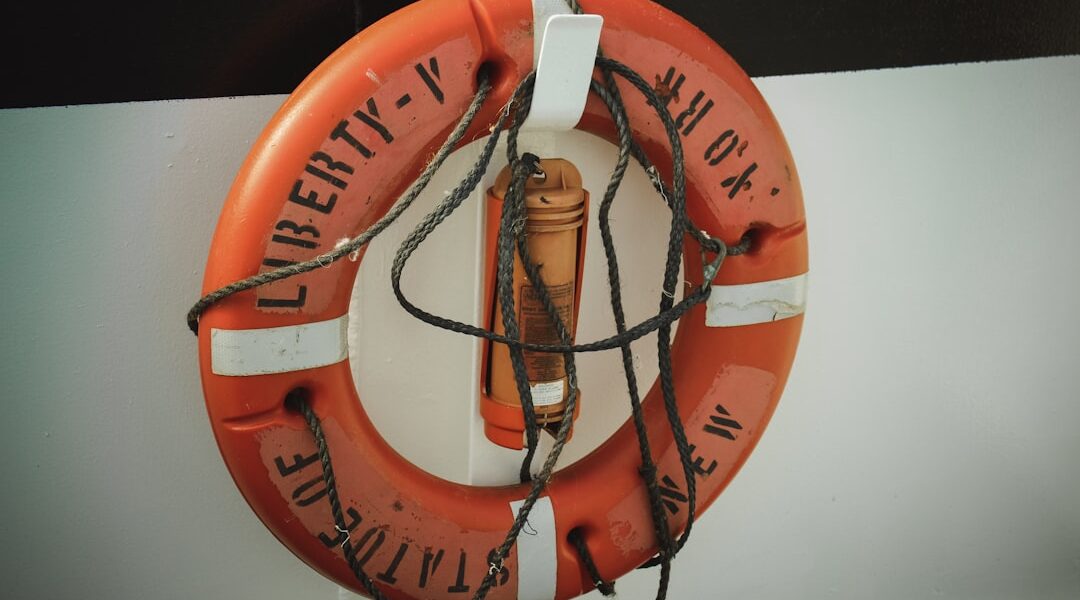
Type IV – Throwable Devices: Cushions or ring buoys. Required on boats 16+ feet. Keep one immediately accessible—you won’t have time to dig through a locker in a man overboard situation. Trust me on this one.
Type V – Special Use: Includes inflatable PFDs, which are comfortable for all-day wear but require maintenance and won’t inflate if CO2 cartridge is expired. Check cartridges monthly.
Best Practice: Wear your PFD. Children under 13 must wear PFDs underway (federal law). Adults should wear them in rough weather, at night, when alone, or anytime you’re at elevated risk. Dead boaters are often found with unworn PFDs in their boat.
Visual Distress Signals
Required on coastal waters, Great Lakes, and waters connected to them for boats 16+ feet. You need either:
- 3 day/night pyrotechnic flares (combination red flares), OR
- 3 day handheld orange smoke and 3 night red flares, OR
- 1 electric distress light (night only) plus 3 day signals (orange flag or smoke)
Flare Types:
- Handheld red flare: Burns 1 minute, visible 3-5 miles. Hold at arm’s length downwind.
- Aerial red meteor: Shoots 500+ feet, visible 10+ miles. Most effective for attracting distant rescuers.
- Orange smoke: Day use only. Visible 3-5 miles. Excellent for helping helicopters spot you.
- Floating orange smoke: Marks your position in water for air search.
Critical: Flares expire after 42 months (manufacture date stamped on each). Expired flares don’t count toward legal requirements, and they’re unreliable. Replace them every 3 years and keep expired flares as backups.
Electronic Visual Distress Signals: New regulations allow electronic devices (like Sirius Signal SOS eVDSD) to replace pyrotechnic flares. That’s what makes these devices endearing to us boaters — they’re reusable, don’t expire, and work reliably—but carry backup flares offshore.
Sound Signaling Devices
Required on all boats. Vessels under 39.4 feet need a horn or whistle capable of a 4-second blast audible for 0.5 nautical miles. Boats 39.4-65 feet need a horn audible for 1 nautical mile plus a bell.
Sound signals prevent collisions in fog and restricted visibility. Memorize these signals:
- 1 short blast: I’m altering course to starboard
- 2 short blasts: I’m altering course to port
- 3 short blasts: I’m operating in reverse
- 5+ short blasts: Danger signal (I don’t understand your intentions or collision is imminent)
- 1 long blast: Leaving a dock or rounding a blind turn
- 1 long blast every 2 minutes: Fog signal for power-driven vessel underway
Fire Extinguishers
Required on boats with enclosed engine compartments, fuel tanks, or closed living spaces. Minimum requirements vary by boat length, but carry more than required—fires grow fast.
Type B Fire Extinguishers are required (for flammable liquids). Look for B-I (5-B) or B-II (10-B) ratings. Marine-rated extinguishers resist corrosion better than hardware store models.
Locations: Keep one in the cockpit/helm (accessible without going below), one near the galley, and one in the engine compartment if space allows. Mount them securely—they’re useless rolling around in a locker.
Maintenance: Check pressure gauges monthly. If the needle isn’t in the green zone, replace or recharge. Tap the bottom to prevent powder settling. Replace after 12 years even if unused.
How to Use: PASS method—Pull pin, Aim at base of fire, Squeeze handle, Sweep side to side. Never fight a fire below deck if you’re not sure you can extinguish it quickly—evacuate and call for help.
Navigation Lights
Required from sunset to sunrise and in restricted visibility. Boats under 39.4 feet need:
- Red sidelight: Port side, visible 112.5° (dead ahead to abeam)
- Green sidelight: Starboard side, visible 112.5°
- White stern light: Visible 135° aft
- White masthead light: Visible 225° forward (required for powerboats, optional for sailboats under sail)
Sailboats under sail use only sidelights and stern light (or combined tricolor at masthead). When motoring, they’re powerboats and must display the masthead light.
Anchor Light: All-around white light visible 2 miles. Required when anchored between sunset and sunrise. Failure to display anchor lights results in collisions and deaths every year.
Test navigation lights before every night trip. Carry spare bulbs. LED fixtures are worth the investment—they last years and draw minimal power.
Emergency Position Indicating Radio Beacon (EPIRB)
Not required for recreational boats, but offshore boaters should carry one. EPIRBs transmit distress signals via satellite, alerting rescue services worldwide with your GPS position. When your boat is sinking 100 miles offshore, EPIRB brings help.
406 MHz EPIRBs are the current standard. Register them with NOAA (free) so rescuers know your boat name, description, and emergency contacts. Battery life is typically 48+ hours of continuous transmission.
Personal Locator Beacons (PLBs) are smaller, person-carried devices. Good for solo sailors or as backup to boat-mounted EPIRBs.
First Aid Kit
Not legally required but absolutely essential. Prepackaged marine first aid kits are convenient, but customize for your crew’s needs (medications, allergies, chronic conditions).
Minimum Contents:
- Adhesive bandages (various sizes)
- Gauze pads and roller bandage
- Medical tape
- Antiseptic wipes and antibiotic ointment
- Pain relievers (ibuprofen, acetaminophen)
- Seasickness medication
- Tweezers, scissors, safety pins
- Disposable gloves
- CPR mask
- Emergency blanket
- First aid manual
Offshore additions: wound closure strips, splinting materials, prescription medications, and advanced trauma supplies. Take a marine first aid course—knowing how to use your kit matters more than what’s in it.
Additional Recommended Equipment
Anchor and Rode: Even if you don’t plan to anchor, carry appropriate ground tackle. If your engine fails, you need to stop drifting toward rocks or shipping lanes.
Bilge Pump: Manual backup pump in case electric pumps fail. Practice using it before you’re taking on water.
Paddle or Oars: For small boats, a way to move if the engine quits.
Flashlight: Waterproof, with spare batteries. Headlamps free your hands for tasks.
Whistle: Personal whistles for each crew member. If you fall overboard, yelling exhausts you quickly; whistles carry farther.
Knife/Multi-tool: Cut fouled lines, free jammed equipment, or perform emergency repairs.
VHF Radio: Not required but essential for communication and calling for help.
Float Plan: Not equipment, but a critical safety practice. Tell someone responsible where you’re going, when you’ll return, and who’s aboard. If you don’t return, they’ll alert authorities. Never skip this step.
Maintenance and Readiness
Safety equipment doesn’t work if it’s not maintained. Create a monthly checklist:
- Inspect PFDs for rips, broken buckles, or deteriorated foam
- Check flare expiration dates
- Test fire extinguisher pressure gauges
- Verify navigation lights work
- Replace first aid kit items used or expired
- Test bilge pumps and check hoses
Store safety equipment where you can access it quickly in emergencies. Flares buried in a forward locker won’t help when you’re sinking. Fire extinguishers locked in cabinets are useless in fires.
Finally, know how to use everything aboard. Read manuals, take classes, and practice emergency procedures. The time to learn how your EPIRB works is not when you’re abandoning ship.


Stay in the loop
Get the latest nautical soundings updates delivered to your inbox.