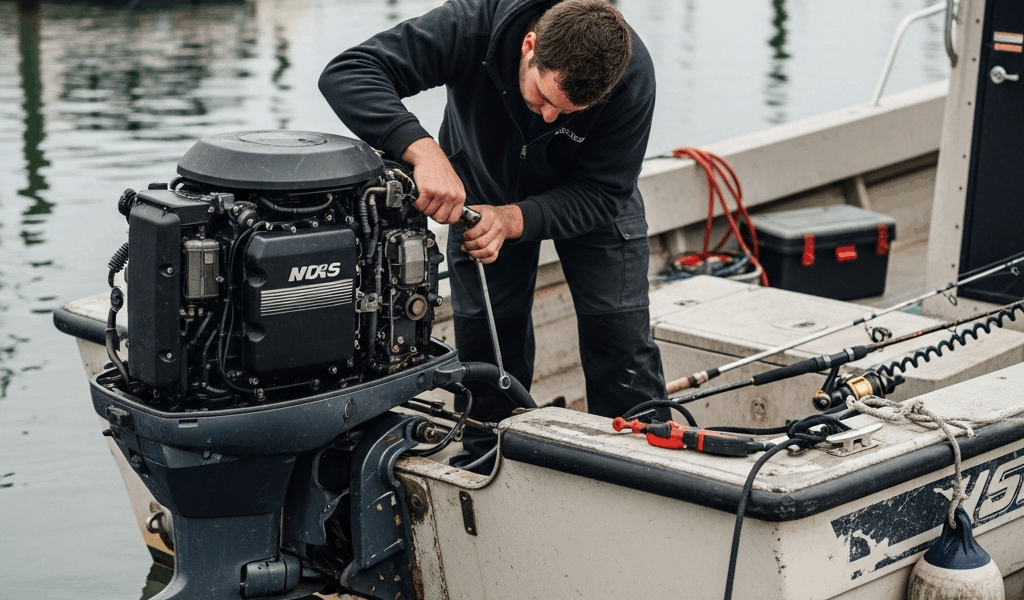
Check the emergency lanyard. That is step one, always. The kill switch lanyard gets bumped, pulled loose, or forgotten more often than any mechanical failure, and it will prevent your outboard from starting every single time. Clip it back in and try again before you touch anything else.
Before You Troubleshoot: Safety Checks First
Three things take 10 seconds to verify and eliminate about 30% of no-start calls to the marina.
Emergency lanyard (kill switch). Confirm the lanyard is clipped to the switch and making full contact. On some models, the contact corrodes over time and needs a firm push to seat. If your engine died suddenly at speed, this is almost always the reason.
Neutral gear. Most outboards will not start unless the shift lever is in neutral. If someone bumped the lever while boarding, it will not crank. Check the position and try again.
Choke position. Cold start requires choke. Warm restart does not. Flooding from too much choke is common — if you smell raw fuel, open the choke fully and crank for 10 seconds to clear excess fuel from the cylinders.
The Correct Diagnosis Order
Every professional marine mechanic follows the same sequence regardless of experience level. Emergency lanyard, neutral gear, choke position, fuel system, battery, spark plugs, air filter. Starting with complex fixes before simple ones wastes an hour. It is almost always an early-sequence item.
The order matters because each check takes progressively more time. The lanyard takes 5 seconds. Checking the fuel system takes 10 minutes. Pulling spark plugs takes 30 minutes. If you skip the first three and go straight to spark plugs, you just lost 30 minutes on a problem that might have been a loose kill switch.
Fuel System Failures: The Most Common Culprit
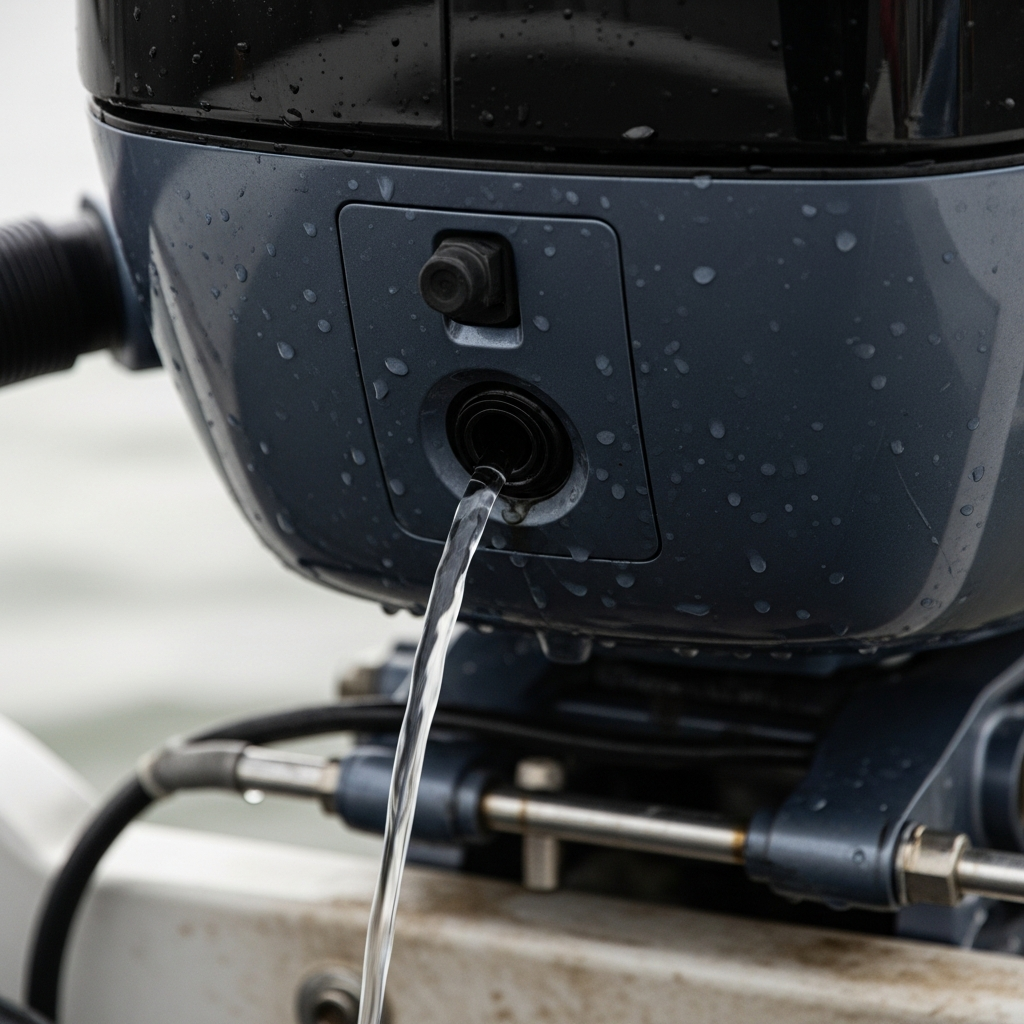
If your outboard cranks but will not fire — or starts briefly and then dies — the fuel system is the first place to look.
Fuel primer bulb. Squeeze it. A healthy primer bulb firms up after 6 to 8 squeezes and stays firm. If it will not firm up, you have an air leak somewhere in the fuel line between the tank and the engine. Check the fuel line connections at both ends — the tank fitting and the engine fitting — for cracks or loose connections.
Old fuel. Gasoline that has sat for more than 30 days without stabilizer starts degrading. After 60 days, it can cause hard starting or no-start conditions. If the boat has been sitting, drain the old fuel and replace it before troubleshooting anything else.
Fuel selector valve. If your boat has a dual-tank setup, confirm the selector valve is pointing to the tank that actually has fuel. Sounds obvious, but it happens.
Fuel filter. A clogged fuel filter restricts flow enough to prevent starting. Filter location varies by engine model — check your owner’s manual. Replacement is a 10-minute job and the filters cost $5 to $15.
How to tell fuel starvation from ignition failure: fuel starvation usually starts the engine briefly — it fires, runs for 2 to 5 seconds, and dies. Ignition failure will not fire at all. No combustion sound, no brief run, just cranking.
Battery and Electrical Checks
Grab a multimeter. Put it across the battery terminals with the key off.
12.6 volts: fully charged. 12.0 volts: marginal, might start on a warm day but will not reliably crank a cold engine. Below 11 volts: the battery will not start the engine. Period.
If the voltage reads good but the engine still will not crank, check the terminals. White or green buildup on battery terminals causes intermittent no-start conditions. Clean them with a wire brush or terminal cleaner and re-tighten.
Diagnosing the click pattern. A single click with no crank means the solenoid is engaging but the starter motor is not turning — usually a bad solenoid or a starter motor failure. No click at all means the battery is dead or the connection between the battery and the starter circuit is broken. Slow crank — the engine turns over sluggishly — means the battery is low. A jump start from another battery confirms the battery as the issue.
Brand-Specific No-Start Patterns
This is where the generic troubleshooting guides stop and the real-world knowledge begins.
Yamaha F-series. The VMAX and F115 models have known thermostat failures that mimic a no-start condition under load. The engine starts fine at idle but dies or refuses to run when you throttle up. The thermostat restricts water flow, the engine overheats rapidly, and the ECU shuts it down. Replace the thermostat — it is a $25 part.
Mercury FourStroke. Vapor lock on hot days after the engine has been shut down briefly. The fuel in the lines gets hot enough to vaporize, and the engine will not restart until it cools down. This is called hot soak. Wait 15 to 20 minutes, try again. If it is a persistent problem, adding heat shielding to the fuel rail reduces the frequency.
Honda BF series. The BF75 through BF90 models vary between manual choke and automatic enrichment circuit depending on model year. Check which system your engine has before assuming the choke is the problem — automatic enrichment does not have a choke lever.
Suzuki DF series. The TLDI fuel injection system requires bleeding after running the tank dry. If the engine ran out of fuel and now will not restart, the injectors have air in the lines. The bleeding procedure is in the service manual — it requires cycling the key to prime the fuel pump multiple times before cranking.
When to Call the Shop
If you have worked through the sequence above and the engine still will not start, there are a few symptoms that mean it is time to stop turning wrenches and call a mechanic.
Compression test below 90 PSI per cylinder. Low compression means internal engine damage — worn rings, a cracked head, or valve issues. This is not a dock-side repair.
Milky dipstick. Water in the oil appears as a milky, tan-colored film on the dipstick. This indicates a head gasket failure or a cracked block. Do not run the engine — you will cause additional damage.
Hydrolocked engine. If the engine flooded and will not turn over at all — the starter engages but the engine will not rotate — do not force it. Water in the cylinders is incompressible. Forcing the starter motor against a hydrolocked engine can bend connecting rods. Pull the spark plugs, crank to clear the water, and then assess.
Fuel in the crankcase. If your oil smells like gasoline, a major seal has failed. This requires professional teardown. Running the engine with fuel-contaminated oil destroys bearings rapidly.



Stay in the loop
Get the latest nautical soundings updates delivered to your inbox.