The overheat alarm just went off. Do not shut down the engine. Reduce throttle to idle immediately — the water pump is still circulating coolant at idle, and killing the engine at full temperature can warp the cylinder heads. Here is exactly what to do in the next five minutes, followed by the root causes and how to fix them.
What to Do When the Alarm Sounds
Reduce throttle to idle. Do not shut down. Cooling water continues flowing at idle speed. Shutting down a fully heated engine stops all coolant flow and lets the residual heat soak into the head, which is when warping happens.
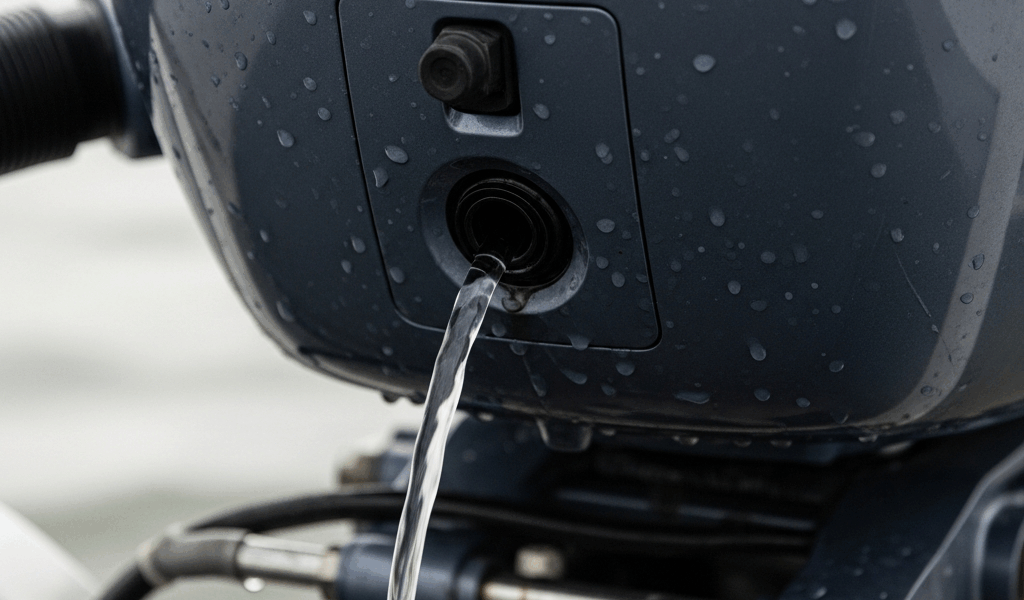
Look at the telltale — the small stream of water that shoots out of the side of the cowling, sometimes called the pee hole. If there is no water stream, the water pump has failed or something is blocking the intake. If water is flowing but weak, you have a partial blockage or a failing impeller.
Move toward shallower water or the nearest dock while idling. Once the temperature drops and the alarm stops, kill the engine. Tilt the outboard up and visually inspect the prop and lower unit water intake for debris — plastic bags, weeds, fishing line, rope. Clear anything you find.
If the alarm does not stop after 2 to 3 minutes at idle with no visible debris, shut down the engine, anchor or drift, and diagnose from there. Do not attempt to run at speed to reach the dock — sustained overheating destroys head gaskets and can crack the block.
The Water Pump Impeller: Cause of 80% of Overheating
The impeller is a rubber or silicone vane pump inside the lower unit that pushes raw water through the engine block for cooling. It is the most common single cause of outboard overheating, and it has a limited service life.
Replace the impeller every 2 to 3 seasons or 300 hours, whichever comes first. Running the engine dry — even briefly, like when flushing on a hose with the water off — destroys impeller vanes immediately. The rubber melts against the housing and the vanes fold over permanently.
How to check without removal: run the engine in a test tank or while moving and watch the telltale stream. A healthy impeller produces a steady stream that is cool to the touch. A failing impeller produces a weak, intermittent, or warm stream. If the telltale runs warm, the impeller is not moving enough water volume to cool the engine properly.
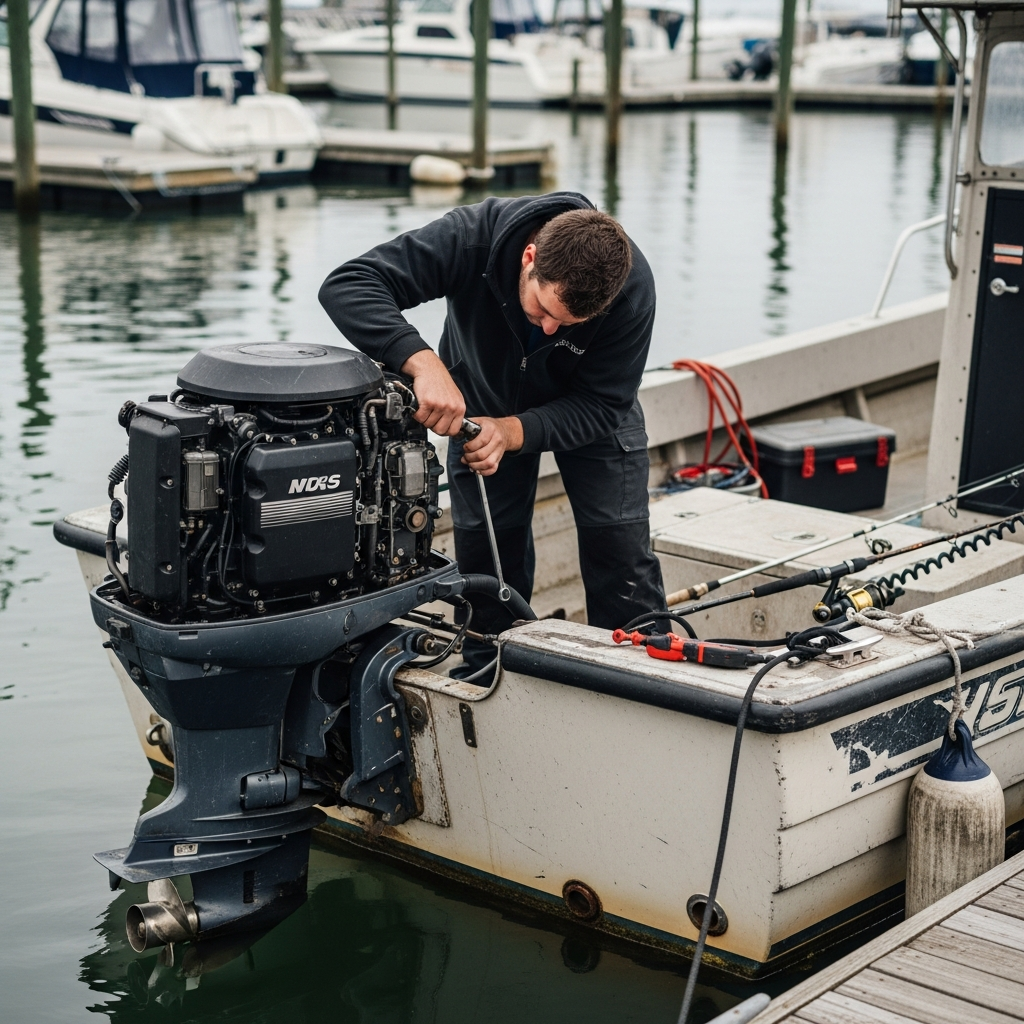
Impeller replacement is accessible with basic hand tools on most outboards. The lower unit comes off with 4 to 6 bolts, and the impeller housing is directly behind the water pump plate. Budget an hour for the first time, 30 minutes once you have done it before. Parts cost $15 to $40 depending on the model.
Debris and Intake Blockage
Plastic bags are the most common external overheating cause. They seal over the water intake grate on the lower unit in seconds, cutting off all raw water flow to the engine. The engine overheats within minutes.
To check: tilt the outboard and inspect the intake grate on the gear case. Weeds, kelp, and fishing line wrap around the lower unit and can partially or fully block the intake. Rope wrapped around the prop can shift position and block water flow intermittently — the engine overheats under load but seems fine at idle.
Temporary field fix: if you suspect loose debris, shift to reverse briefly. The reverse water flow can clear material that is not tightly wrapped. Always check the telltale flow after any suspected debris encounter to confirm water flow has been restored.
Thermostat Failure
A thermostat stuck closed causes rapid overheating under load because it prevents cooling water from flowing through the engine block. A thermostat stuck open causes poor warm-up performance but will not cause overheating — the engine just takes longer to reach operating temperature.
Testing: remove the thermostat and drop it in boiling water. It should open at 140 to 160 degrees Fahrenheit — check the specification for your specific model. If it does not open, replace it. If it opens partially or slowly, replace it. A thermostat costs $10 to $25 and takes 30 minutes to swap on most outboards.
A stuck-closed thermostat is the diagnosis when the impeller is confirmed good and the intake is clear, but the engine still overheats under load. The telltale may still flow — water gets past the thermostat through bypass circuits — but the volume is insufficient for full cooling at higher RPMs.
Brand-Specific Cooling System Notes
Yamaha HPDI models. These use a closed-loop cooling system with a separate coolant reservoir — the failure mode is different from standard open-loop cooling. Check the reservoir level and the condition of the coolant before assuming impeller failure. The HPDI cooling system has more in common with an automotive cooling system than a typical outboard.
Mercury SmartCraft systems. The alarm pattern communicates the problem. A single beep is a general warning. A double beep indicates overheat. A continuous alarm means critical — shut down immediately. The SmartCraft gauge system displays diagnostic codes that map to specific failure points. Check the gauge before troubleshooting blind.
Honda BF series. Known thermostat sensitivity. Honda recommends OEM thermostat replacement at 3 years regardless of symptoms. Aftermarket thermostats on Honda BFs have a poor track record — the opening temperature tolerance is wider than OEM, and a thermostat that opens 10 degrees late causes intermittent overheating under load.
Suzuki DF series. In addition to the standard water intake on the lower unit, Suzuki DF models have a cooling water filter screen that can clog with sand and fine debris. Check this screen before pulling the lower unit for an impeller inspection — it is accessible without major disassembly and is often the cause of reduced cooling on boats operated in shallow or sandy water.

Stay in the loop
Get the latest nautical soundings updates delivered to your inbox.