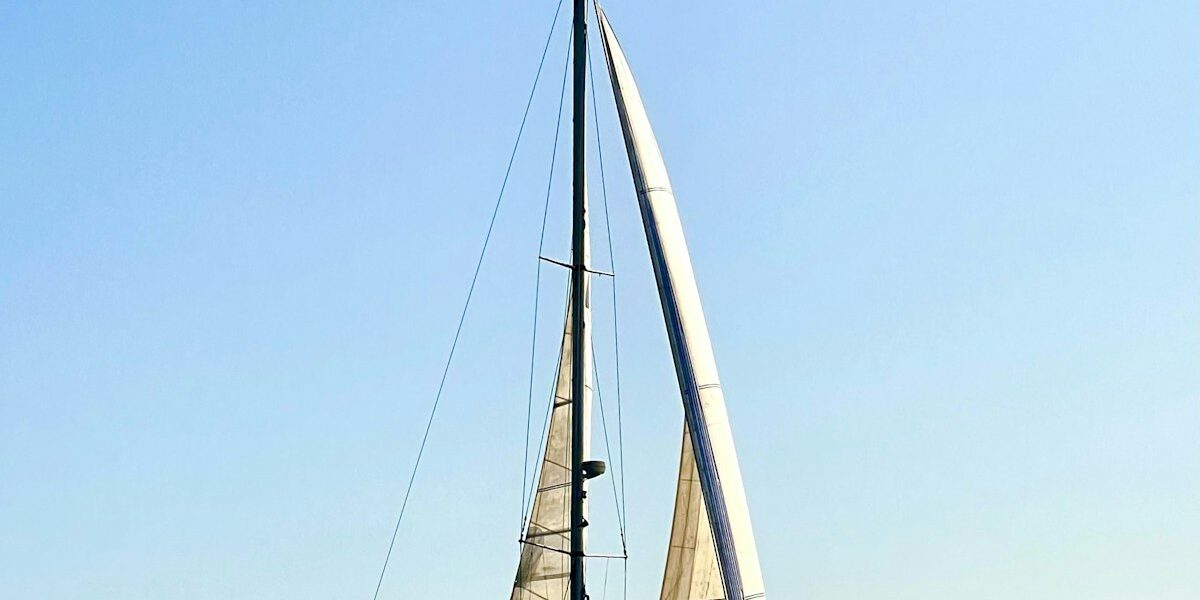
Hull design has gotten complicated with all the technical jargon flying around. As someone who’s studied naval architecture and sailed on different hull types, I learned everything there is to know about displacement hulls. Today, I will share it all with you.
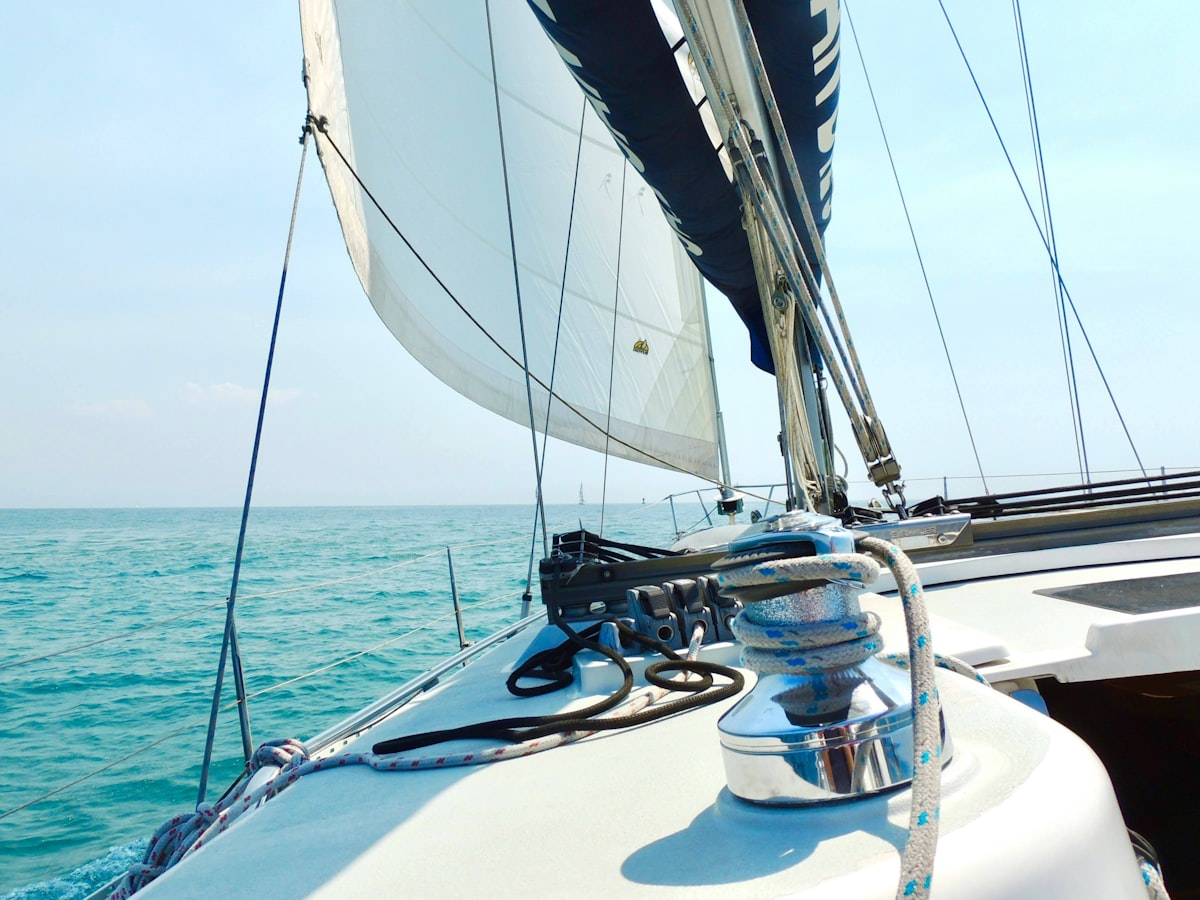
Basics of a Displacement Hull
A displacement hull is shaped to move water aside, creating a wave as it moves. Unlike planing hulls, which rise and skip over the water, displacement hulls plow through, pushing water to the sides and beneath the vessel. This results in a gentle motion, often described as cutting through the water gracefully.
Design and Structure
Probably should have led with this section, honestly. The distinctive shape includes a rounded or V-shaped bottom. The bow is typically pointed, assisting in slicing through the water. The stern tapers to reduce resistance. These elements work together to maximize efficiency at lower speeds.
Speed and Performance
Displacement hulls are designed for efficiency rather than speed. They adhere to the hull speed formula, which is based on the waterline length. Generally, the longer the waterline, the faster the potential speed, but they won’t plane like high-speed boats.
That’s what makes them ideal for long-distance cruising. Their efficiency at slicing through water means they can travel long distances without excessive energy consumption.
Efficiency and Stability
The design of displacement hulls ensures minimal resistance at typical operating speeds. Their stability comes from their ability to stay upright due to the lower center of gravity provided by the weighted keel. The rounded design also aids in reducing pitching and rolling, contributing to passenger comfort.
Common Uses
Displacement hulls are prevalent in cargo ships, cruising sailboats, and trawlers. Fishing boats employ this design for their ability to handle rough seas while maintaining stability. Yachts with displacement hulls are chosen for their spacious layouts and comfortable ride over long distances.
Comparisons with Other Hull Types
Planing hulls operate at higher speeds by lifting above the water surface, reducing drag. While faster, they consume more fuel and are less stable in rough waters compared to displacement hulls. Semi-displacement hulls offer a middle ground, providing speed enhancements while retaining some characteristics of full displacement.
Maintenance and Environmental Impact
The maintenance of displacement hulls involves regular inspections for damage or wear. Hull cleaning to remove biofouling organisms is necessary to maintain efficiency. Durability is another advantage – these hulls often have a longer lifespan due to their heavy-duty build.
Displacement hulls are more fuel-efficient compared to planing hulls, leading to decreased fuel use and lower emissions. Their smooth movement through the water also minimizes disturbance to marine ecosystems.
Is a Displacement Hull Right for You?
Understanding your intended use is crucial. If you prioritize fuel efficiency, stability, and long-range cruising over speed, a displacement hull is an excellent choice. For those seeking speed and performance, other hull types may be more appropriate.


Stay in the loop
Get the latest wildlife research and conservation news delivered to your inbox.