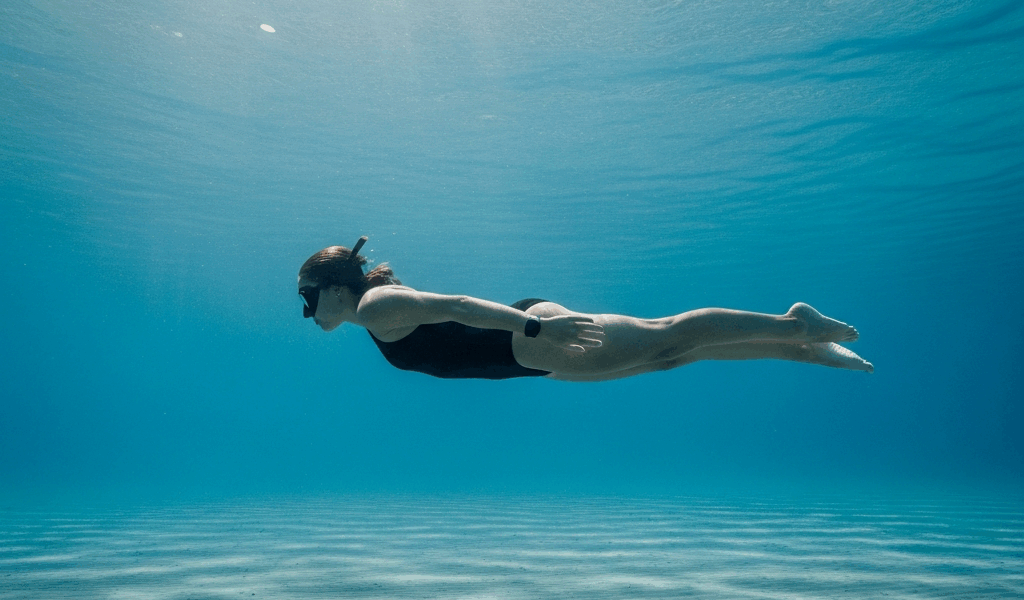
Freediving Static Apnea Records — How Long Humans Can Hold Their Breath
Freediving has gotten complicated with all the misinformation flying around — especially when people start throwing out breath-holding numbers without explaining what those numbers actually mean. So let me open with the one that stops people cold: 24 minutes and 37 seconds. Sit with that before we go anywhere. Twenty-four minutes. That’s a full sitcom episode. That’s enough time to soft-boil an egg, eat it, wash the pot, and wonder what to do next. Budimir “Buda” Sobat — a Croatian freediver born in 1956 — held his face underwater in a pool in Sisak, Croatia, in March 2021 and didn’t breathe for longer than most people’s lunch breaks. Understanding how that’s even biologically possible, and what kind of person actually builds their life around chasing it, is one of the more genuinely fascinating rabbit holes I’ve fallen into across years of writing about extreme sports.
Worth saying upfront: not all breath-holding records are the same discipline. The differences matter enormously, and collapsing them into one vague claim about “holding your breath” is exactly the mistake most coverage makes. The 24-minute figure involves oxygen pre-breathing before the attempt. The “pure” record — no supplemental oxygen, just air — is a completely different number, achieved through a completely different physiological pathway. We’re going to do better than that here. So, without further ado, let’s dive in.
The Current Records — Static and Dynamic
Static Apnea With Oxygen Pre-Breathing
Sobat’s 24:37 was set on March 27, 2021 — breaking his own previous mark of 24:11. He breathed pure oxygen for roughly 30 minutes before the attempt, a protocol that flushes nitrogen from the bloodstream and saturates hemoglobin as completely as possible before the clock even starts. Guinness World Records recognizes this as the official breath-holding record, and it’s the number most people find when they go searching. It is extraordinary. It is also, technically, a different event than what competitive freedivers do under AIDA — the Association Internationale pour le Développement de l’Apnée — sanctioned rules.
Static Apnea Without Oxygen — The “Pure” Record
The AIDA static apnea record without oxygen pre-breathing is 11 minutes and 35 seconds. Branko Petrović of Serbia set it in 2014. That number feels almost more impressive in certain ways — no oxygen loading, no supplemental anything. Just a very well-prepared human body and a degree of mental discipline that honestly defies easy description. The gap between 11:35 and 24:37 tells you almost everything you need to know about what supplemental oxygen actually does physiologically. We’ll get into that properly below.
Dynamic Apnea — Movement Changes Everything
Dynamic apnea is horizontal distance traveled underwater on a single breath — either with fins or without. Goran Čolak, another Croatian, holds the dynamic apnea with fins record at 300 meters. Three football fields. Underwater. One breath. Without fins, it’s 244 meters, held by Mateusz Malina of Poland. These disciplines combine breath-holding capacity with efficient swimming mechanics and are arguably more physically demanding than static apnea in terms of total output. Working muscles consume oxygen fast — which is why dynamic apnea records top out in the 8–10 minute range for elite athletes, well below the 11–24 minutes seen in static events.
Competitive freediving also recognizes depth disciplines — Constant Weight, Free Immersion, Variable Weight — but those involve pressure equalization and depth adaptation, which is its own enormous subject for another time.
How Someone Trains to Hold Their Breath for 24 Minutes
Probably should have opened with this section, honestly. The records are just numbers. The training is a portrait of obsession — and that’s where the actual human story lives.
CO2 Tolerance — The Part Nobody Talks About Enough
Most people assume running out of oxygen ends a breath hold. It doesn’t. The urge to breathe is triggered primarily by rising CO2 in the blood — not falling oxygen. Your body monitors carbon dioxide concentration, the byproduct of cellular metabolism, and when it crosses a threshold, the diaphragm starts contracting involuntarily. Those contractions feel like the most urgent biological imperative you’ve ever experienced. Elite freedivers train their bodies to tolerate CO2 levels that would send an untrained person into immediate panic.
CO2 tolerance training looks deceptively simple from the outside. A common protocol — called CO2 tables — involves holding your breath for a fixed duration, resting for a shorter duration, and repeating six to eight times. Something like: hold 2 minutes, rest 2 minutes, hold 2 minutes, rest 1:45, hold 2 minutes, rest 1:30. The shrinking rest periods mean CO2 is still elevated when the next hold begins. Over months and years, the threshold at which the brain triggers the “breathe now” alarm actually shifts. I tried a modified version of this once, lying on my living room floor with a Contec CMS50D pulse oximeter — about $25 on Amazon — clipped to my finger. Six sessions before I decided I had tremendous respect for people who do this seriously. My CO2 tolerance improved measurably. My commitment did not. Don’t make my mistake of thinking a few weeks gets you anywhere close to understanding what these athletes endure.
Oxygen Pre-Breathing Protocol
For record attempts using supplemental oxygen — Sobat’s category — athletes breathe medical-grade O2 through a demand valve regulator for 20 to 30 minutes before the attempt. This does two things: it displaces nitrogen from lung tissue and the bloodstream, reducing the load on hemoglobin binding sites, and it maximizes starting oxygen saturation to essentially 100%, compared to the 98–99% ceiling you hit breathing normal air. The extra 1–2% sounds trivial. Multiplied across total blood volume and oxygen delivery efficiency during a prolonged apnea, it’s the difference between 11 minutes and 24 minutes. That’s what makes the oxygen pre-breathing debate so endearing to us numbers people — a seemingly tiny variable with enormous real-world consequences.
Meditation, Heart Rate, and the Slowdown
Sobat reportedly enters attempts with a resting heart rate in the low-to-mid 40s. During the hold itself, elite freedivers can drop their heart rate to 20–30 beats per minute — sometimes lower — through a combination of the mammalian dive reflex and deliberate parasympathetic activation. This is not passive. It requires active mental work: suppressing the stress response, staying calm, guiding the body toward something closer to torpor than sleep. Many top freedivers have backgrounds in yoga, meditation, or martial arts. Sobat has spoken about mental visualization as central to his preparation — spending extended time before each attempt running a detailed mental simulation of the hold from start to finish, minute by minute.
The Physiology — What Happens to Your Body
Spleen Contraction and Red Blood Cell Release
But what is the spleen’s role in breath-holding? In essence, it’s a reservoir for red blood cells. But it’s much more than that. During apnea, the spleen contracts and dumps stored cells into circulation — studies on competitive freedivers, published in journals like the Journal of Applied Physiology, show that elite breath-holders have significantly enlarged spleens compared to non-divers, and spleen contraction during a hold can increase circulating red blood cell volume by 6–9%. More red blood cells means more hemoglobin. More hemoglobin means more oxygen-carrying capacity. The body mobilizes a biological reserve that most humans never access in their entire lives.
Researchers believe this is a trainable adaptation — the spleen enlarges with consistent apnea work, similar to how muscles hypertrophy under load. Experienced freedivers show a more pronounced response than beginners. The body, apparently, learns to be better at this.
Blood Shift and Peripheral Vasoconstriction
Peripheral vasoconstriction kicks in within the first 30–60 seconds of a breath hold. Blood flow to the extremities — hands, feet, forearms — drops substantially as the body prioritizes oxygen delivery to the brain, heart, and lungs. Same mechanism that allows Weddell seals to extend submersion times dramatically. Humans share this evolutionary inheritance, though in far less developed form. During deep dives, a related phenomenon called blood shift moves plasma into the chest cavity to prevent lung compression. In pure static apnea, vasoconstriction is the dominant mechanism — and I’m apparently someone who notices this acutely during even short practice holds, going cold in my fingers within a minute while my torso stays warm.
When It Becomes Dangerous — Shallow Water Blackout
Oxygen partial pressure in the blood can remain adequate during a breath hold even as absolute oxygen levels fall — full lungs maintain adequate diffusion into the bloodstream through partial pressure. As the hold continues and oxygen depletes, there’s a point at which partial pressure drops below the threshold for consciousness. No gasping. No sense of urgency. Just unconsciousness. That’s shallow water blackout — and it kills freedivers every year, including experienced ones.
The insidious part: the CO2-driven urge to breathe, which normally acts as a warning system, can mask the oxygen crisis entirely if hyperventilation before a hold has already artificially depressed CO2 levels. This is why every legitimate freediving training protocol requires a buddy, never training alone, and why competitive events station dedicated safety divers at depth and surface throughout every single attempt. No exceptions. Ever.
Notable Freedivers and Their Stories
Budimir Sobat — The Record Holder
Sobat was born in 1956. He set the 24:37 record in his mid-sixties. Most competitive endurance athletes peak in their twenties and thirties — Sobat has been setting and breaking his own records for over a decade, trajectory pointing upward rather than declining. He’s described freediving as arriving in his life relatively late and becoming a near-total focus. That kind of late-blooming obsession sometimes produces the most committed practitioners — no childhood ambition behind it, no career calculation. Just a discovery that turned into everything.
Goran Čolak — Record Holder Turned Safety Advocate
Frustrated by the gap between elite freediving performance and public understanding of its risks, Čolak — who held the static apnea record multiple times before Sobat — has been vocal about the psychological cost of record attempts. He’s described the final minutes of extended holds as entering a cognitive state that’s genuinely hard to translate into language. Not quite pain. Not quite calm. Something more like extreme dissociation from the body’s own signals. He’s also been involved in freediving safety education, which is a meaningful choice for someone who has spent years deliberately inducing one of the more extreme physiological states a human can non-fatally enter.
Alessia Zecchini — The Women’s Record and Depth Dominance
The women’s static apnea record without oxygen is 10 minutes and 22 seconds — held by Alessia Zecchini of Italy. Zecchini is better known for her Constant Weight depth records: she became the first woman to reach 100 meters on a single breath in 2017, then pushed that to 113 meters. Her story entered wider public awareness through coverage of the freediving community following the film The Rescue. What’s notable is the combination of depth discipline dominance with world-class static apnea capacity — disciplines that train somewhat differently and don’t always correlate in the same athlete. That’s what makes Zecchini’s career particularly endearing to us freediving observers.
The Community and Culture Around Extreme Breath-Holding
Competitive freediving occupies a strange cultural space. Technically extreme, but practiced with a meditative philosophy that sets it apart from adrenaline-focused action sports. Most serious freedivers describe the discipline in terms closer to yoga or long-distance running than to base jumping or big-wave surfing. They’re chasing stillness, not excitement. The community is smaller and more interconnected than outsiders expect — top competitors train in shared locations like Vertical Blue in Dean’s Blue Hole, the Bahamas, and maintain a collaborative approach to safety that’s unusual in elite competition.
The blackout risk creates genuine mutual-protection culture. Competitors serve as each other’s safety divers. Records get celebrated across national lines. And there’s a shared acknowledgment — rarely stated outright, but present in almost every serious interview with elite freedivers — that what they’re doing is genuinely dangerous, genuinely strange, and genuinely worth understanding if you want to know something real about the outer edges of human capability.
Sobat surfacing from 24:37 with a slight smile, surrounded by coaches and safety personnel in that pool in Sisak, is one of those sports moments that doesn’t fit any existing template. No opponent beaten. No distance covered. Just a human body, water, and an almost unimaginable quantity of time without a single breath. That was March 2021. Nobody has touched it since.

Stay in the loop
Get the latest nautical soundings updates delivered to your inbox.