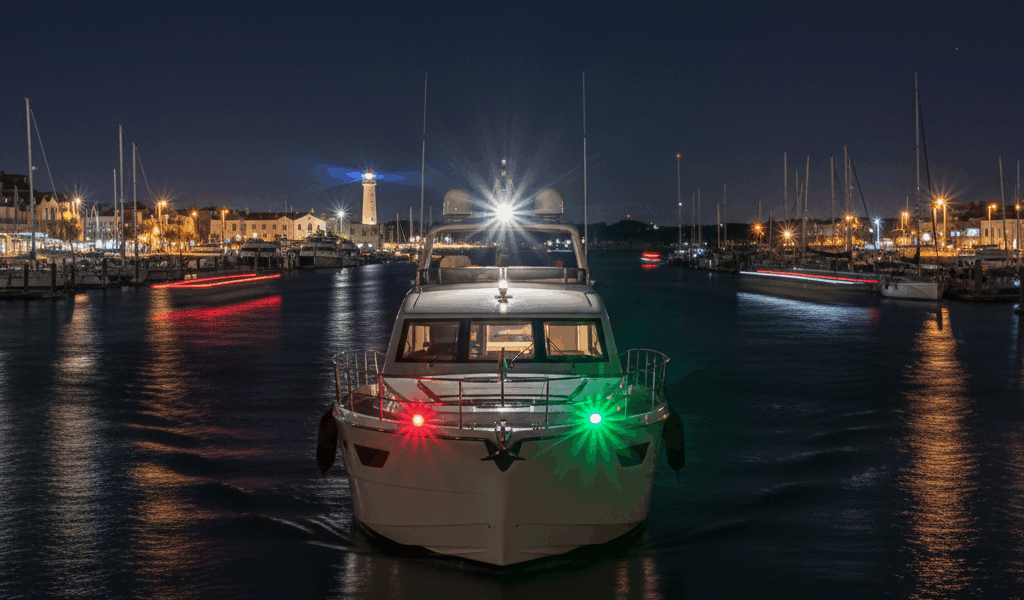
Boat navigation rules have gotten complicated with all the “just use the chartplotter” dependency modern boating has developed. As someone who’s spent years on the water and studying the Rules of the Road, I’ve learned everything there is to know about what navigation lights actually communicate — and why the full picture makes you meaningfully safer than the basic knowledge most recreational boaters have. Today, I’ll share it all with you.
Navigation lights are one of those subjects every boater learns at the basic level and then stops thinking about until something goes wrong. Most recreational boaters can identify a green light on the right side and a red light on the left and consider their knowledge complete. That’s not wrong — it’s just incomplete. The full picture of maritime navigation lighting rules makes you a meaningfully safer boater and helps you make better decisions when you encounter other vessels at night or in restricted visibility.
The Fundamental Logic: What Navigation Lights Communicate
Navigation lights don’t just make your vessel visible. They communicate your vessel’s heading, what type of vessel you are, and what you might be doing — information that allows the skipper of another vessel to determine the appropriate action under the Rules of the Road. That communication happens through a standardized system of colors, arcs of visibility, and combinations that have been internationally agreed upon. That’s what makes the COLREGS lighting system endearing to us who study maritime safety — it’s a language that works without words or radio contact.
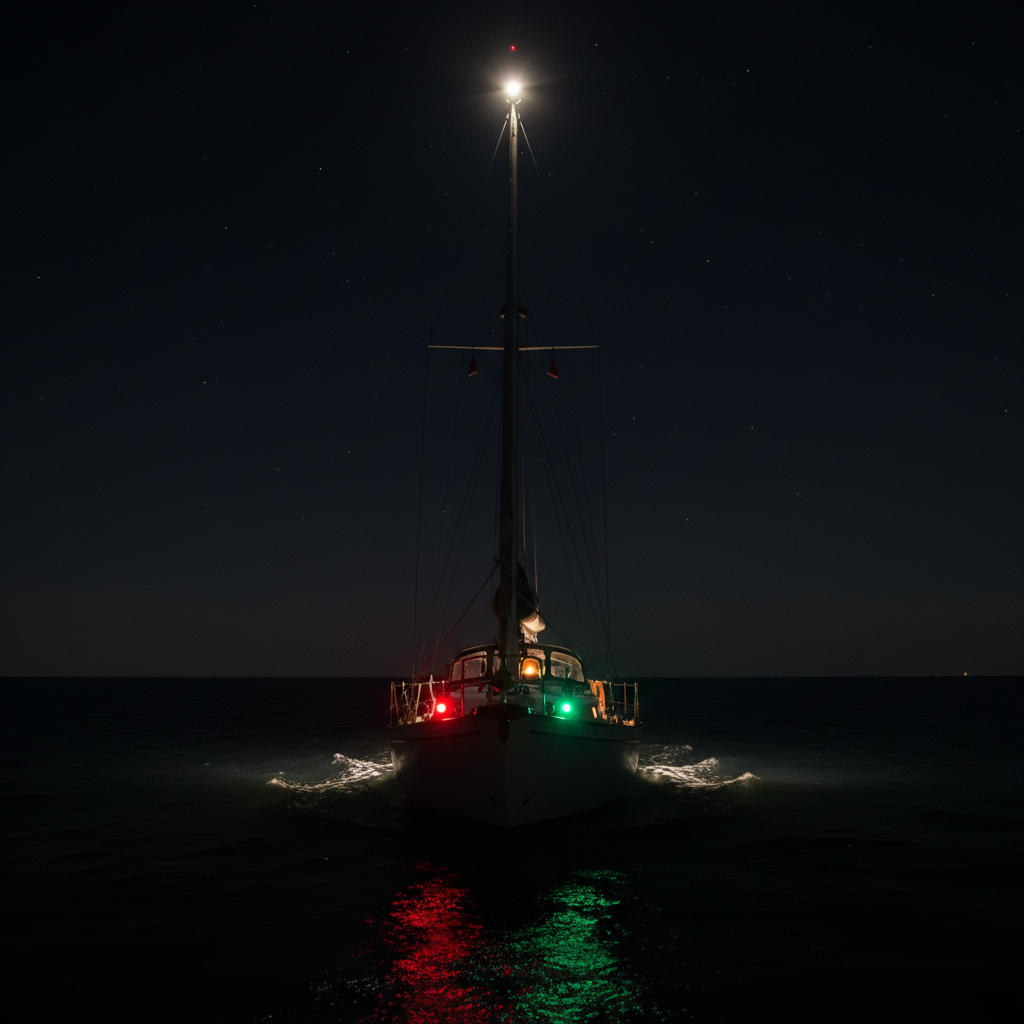
The core light set for most recreational powerboats under 65 feet: a red sidelight visible from ahead to 22.5 degrees abaft the port beam (112.5 degrees total arc), a green sidelight with the same arc on the starboard side, a white masthead light visible from ahead to 22.5 degrees abaft both beams (225 degrees total arc), and a white stern light visible from astern. This combination allows an approaching vessel to determine your heading and relative angle of approach from the lights they can see.
Probably should have led with the key mental exercise, honestly — if you see a red light and a white light, the vessel is showing you its port side and is crossing your path from right to left. If you see a green light and white light, it’s showing its starboard side. If you see both red and green plus a white masthead light, the vessel is approaching nearly head-on. The lights describe the geometry of the encounter before you can see the vessel shape.
Sailing Vessel Lighting
Sailboats under sail (not motoring) use different lighting rules than powerboats. The standard configuration: red and green sidelights plus a stern light. However, sailing vessels under 65 feet may instead use a tricolor lantern at the masthead combining red, green, and white in the same arcs. The advantage of the tricolor is that it’s more visible at range than deck-level sidelights.
This distinction matters when you’re approaching a vessel at night. A high single white light with faint colored lights at the sides suggests a sailing vessel under sail. When a sailboat starts its engine and motors, it must display powerboat lights. I’m apparently one of those boaters who tests this knowledge by quizzing myself on every light pattern I see at night — a habit that annoys crewmates and has probably prevented incidents.
Vessels With Right of Way: Light Identification
Frustrated by the theoretical way the Rules of the Road are often taught, I want to emphasize that knowing these light combinations is self-protection, not just compliance. The COLREGS establish a hierarchy of vessels based on their maneuverability: vessels not under command (two vertical red all-round lights), vessels restricted in ability to maneuver (two red all-round lights with a white between them), vessels engaged in fishing. When you see the lights indicating a vessel restricted in ability to maneuver, your responsibility is to stay clear of them regardless of right-of-way lanes.
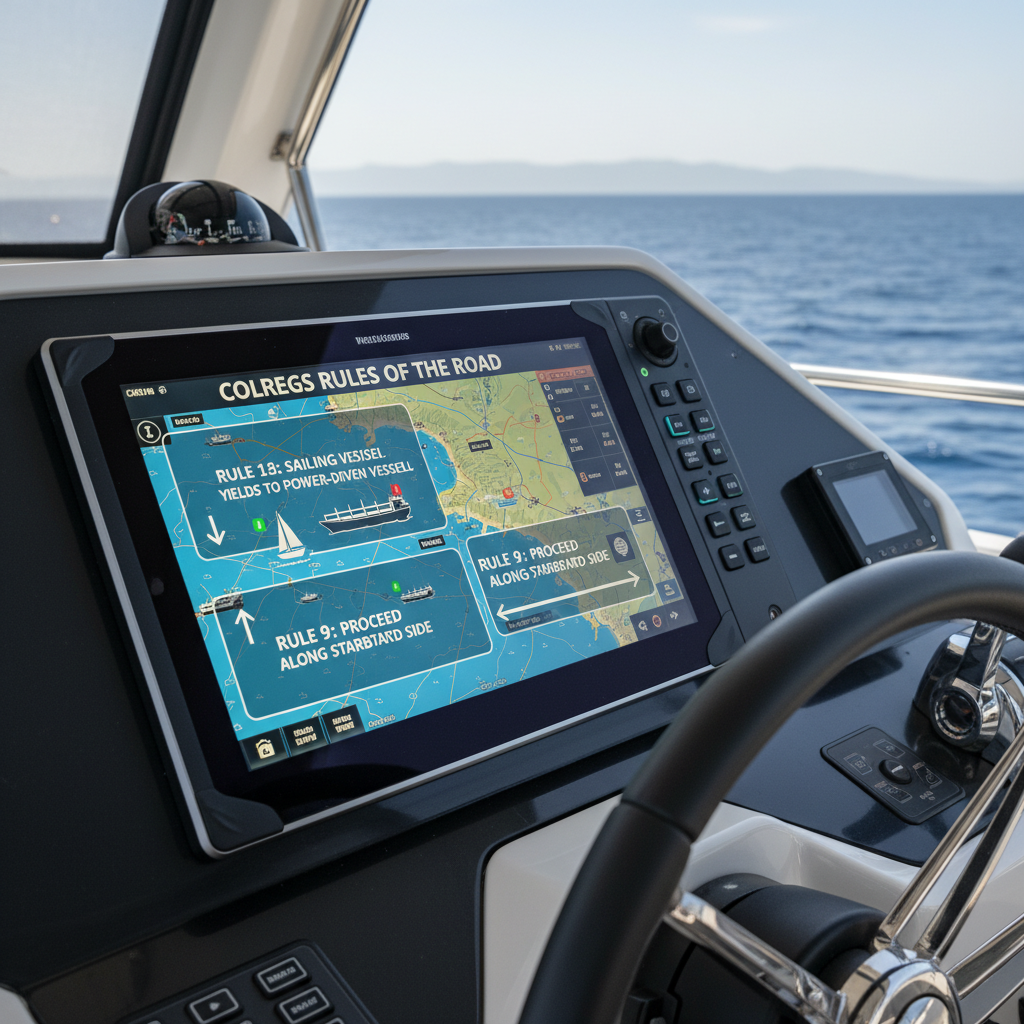
Fishing vessels present a practical challenge. The lights for a vessel trawling (two green lights, the upper one with a masthead light) differ from those for a vessel fishing other than trawling (two red lights, the upper one with a masthead light). At night, in traffic, encountering a large commercial fishing vessel with nets in the water is a situation where correctly reading those lights is safety-critical, not academic.
Anchor Lights and Rules for At-Rest Vessels
Anchored vessels are required to display an all-round white light at the highest practical point. Where boaters commonly fail: anchoring in areas that are not recognized anchorages, in channels, or near traffic lanes without displaying adequate anchor lights. Being anchored without proper lighting makes your vessel invisible to approaching traffic, which eliminates any legal protection you might otherwise have and puts you at risk regardless of who would technically be at fault in a collision.
Practical Recommendations
Know your light system and test it before every night departure. Navigation light failures happen, and discovering them while underway in traffic is the wrong time. Carry spare bulbs or retrofit to LED navigation lights that are more reliable and draw less power. Know what you’re looking at when you see other vessels’ lights — not just recognizing the basic red/green combination, but understanding what the full pattern communicates about the other vessel’s size, activity, and heading. That knowledge is what separates a skipper who reacts correctly to a developing situation from one who creates one.



Stay in the loop
Get the latest nautical soundings updates delivered to your inbox.