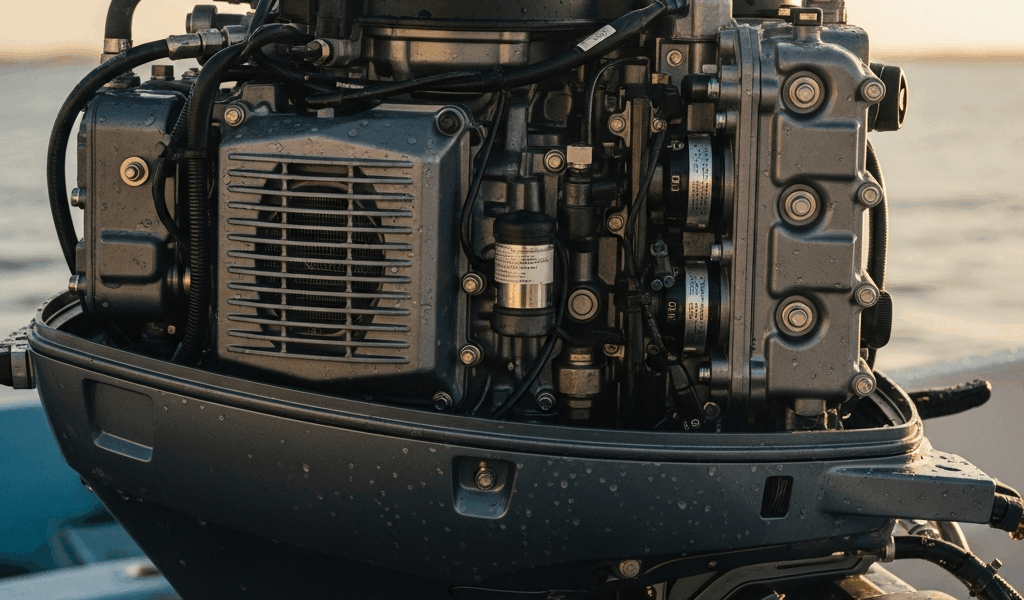
Why Outboards Idle Rough in the First Place
Outboard troubleshooting has gotten complicated with all the forum noise and conflicting advice flying around. So let me cut through it. A rough idle feels catastrophic when you’re standing on a dock at 6 a.m. — but it almost never is.
As someone who has spent more weekends than I’d like to admit troubleshooting other people’s boats, I learned everything there is to know about rough idle diagnosis the hard way. Today, I will share it all with you.
Here’s the short version: when a healthy idle disappears — that steady, even rumble you barely notice — and gets replaced by a loping, stuttering mess, something in the fuel or ignition system has gone sideways. Three buckets cover 95% of cases. Fuel delivery. Spark and ignition. Air-fuel mixture drift. That’s it. And most of them don’t require a mechanic’s invoice to fix.
The key is starting in the right place. That’s what separates a two-hour fix from a ruined weekend.
Start Here — the No-Tool Checks
Before you touch a wrench, check the obvious. Probably should have opened with this section, honestly — but understanding what you’re chasing makes the checklist actually stick.
Fuel starvation is the number one cause of rough idle. Zero tools required to diagnose it. Check your tank level first. I know. Sounds embarrassingly simple. But I’ve watched people pull entire carburetors apart on a quarter tank while crud had settled over the pickup tube. Don’t make my mistake.
Squeeze the primer bulb next. Four or five pumps on a healthy system and it firms up — stays firm. A spongy bulb that never hardens is leaking air into the fuel line. If the idle smooths out noticeably while you’re actively squeezing, that’s your diagnosis: fuel delivery under load is failing. Replace the bulb. They run $8 to $15 at any marine supply and take five minutes to swap.
Now check fuel age. This is the part nobody wants to admit. Ethanol-blended gas — which is basically everything sold at North American pumps — goes stale in 30 to 60 days sitting in a tank. It turns varnishy. Gummy. The engine runs, but it idles rough, hesitates on acceleration, and sometimes refuses to start without choke. If your motor has been sitting since last fall, that’s probably your answer right there. Drain the tank, run fresh fuel through, and the idle usually cleans up within a day of running.
While you’re back there, inspect the fuel line end to end. Kinks restrict flow. Cracks let fuel vapor escape and suck air in, leaning out the mixture — same symptom as a bad carburetor, way cheaper fix. A split line costs around $12 and ten minutes to replace.
Check the vent cap on your tank too. It needs to breathe air in as fuel depletes. A clogged vent pulls a vacuum that starves the carb or fuel pump. Unscrew it, blow through it. Feel resistance? Soak it in carb cleaner overnight or just replace it. They’re a few dollars.
Check the Spark Plugs Next
Fouled plugs create a rough idle that feels identical to a carburetor problem. That’s what makes them endearing to us amateur diagnosticians — they waste entire weekends on phantom carb gremlins when the real answer was a $6 plug.
Pull yours. You need a ratchet and a spark plug socket — about $10 combined if you don’t have them. A healthy plug has a light tan or gray electrode. Almost clean-looking. Pull one that’s black and oily and you’re looking at fuel fouling from a rich mixture or oil blowby. White or tan crusty deposits mean carbon buildup from running lean or burning old fuel residue.
Here’s what I learned the hard way on a ’98 Mercury 40 I was chasing for three days: a single bad plug on a two or three-cylinder outboard creates an uneven, loping idle that sounds exactly like a trashed carb. Two cylinders fire fine. The third misfires every other stroke. You get that knock-knock-knock rhythm. Maddening. Check the gap on each plug — most small outboards run 0.030 to 0.040 inches. Anything over 0.045 is probably misfiring at idle.
If any plug looks wrong, replace the whole set. Four quality plugs run $20 to $30. I’m apparently sensitive to brand loyalty and NGK works for me while off-brand plugs never seem to last a full season. Clean plugs solve more rough idles than anything except fresh fuel. Run the numbers on that before you touch the carburetor.
Fuel System Fixes — Carb or Fuel Injector
But what is a rough idle at this stage? In essence, it’s a fuel metering problem. But it’s much more than that — it’s a signal that something precise and tiny has gotten partially blocked or out of spec.
So, without further ado, let’s dive in.
For carbureted engines — most outboards built before 2010 — the idle jet gets clogged with varnish from old fuel. The idle circuit is a tiny passage, and varnish gums it up fast. Before pulling the whole carburetor, try this first: remove the float bowl and spray carburetor cleaner directly into the idle jet passage. Let it soak an hour, then start the engine. One soak clears the varnish often enough that it’s worth the 20 minutes before committing to a full rebuild.
If the soak doesn’t work, the carb needs a proper overnight bath. Don’t be afraid of removing it yourself — four or five nuts, fuel line pulls right off. A rebuild kit costs $30 to $60. Berryman Chem-Dip runs about $12 a gallon and dissolves varnish completely overnight. That’s the move.
Fuel-injected outboards — mostly anything post-2004 from Yamaha, Mercury, or Suzuki — usually point to the injectors themselves or the VST (vapor separator tank). Dirty injectors cause a lean misfire and rough idle. While you won’t need a full injector cleaning rig, you will need a fuel system cleaner additive and a full tank run to see if that resolves it first. If it doesn’t, a professional injector cleaning service runs $80 to $150 and restores spray pattern and flow.
A failing VST is trickier. The one-way valve and check ball inside can stick or fail, cutting fuel pressure to the injectors. You’ll notice rough idle and hesitation — sometimes it actually improves when you’re on plane. VST failure might be the best option to suspect at this point, as injected outboard diagnosis requires systematic fuel pressure elimination. That is because pressure drop at idle but not at wide-open throttle points directly at the low-speed fuel circuit, not mechanical wear.
When to Stop DIYing and Call a Technician
First, you should run a compression test — at least if you’ve already cycled through fuel checks, plugs, and carb cleaning with no improvement. It costs $60 to $100 at a shop and tells you immediately whether you’re chasing fuel or mechanical damage.
A healthy outboard reads 120 to 150 PSI per cylinder. Any cylinder under 90 PSI and you’re dealing with internal wear. Ring failure. Valve problems. Head gasket leakage. That’s not something carb cleaner fixes. That’s a powerhead conversation with a mechanic — specifically someone with experience on your brand.
Also stop DIYing if rough idle shows up alongside overheating, oil in the cooling water, or power loss under load. Those combinations suggest internal damage compounding itself the longer you run it. Tow it now. A seized powerhead costs two to three times what a tow and early repair would have.
That said — work through this sequence methodically and you’ll find and fix the problem yourself nine times out of ten. Rough idle is annoying. It is almost never catastrophic. Two hours, maybe $40 in parts, and you’re back on the water.




Stay in the loop
Get the latest nautical soundings updates delivered to your inbox.